Disconnected equipment
Sensors, controllers and equipment may use different systems and interfaces.
ARED brings connected equipment, operational data and local intelligence onto one managed edge platform — helping organizations monitor remote assets, respond locally and connect with their central systems.
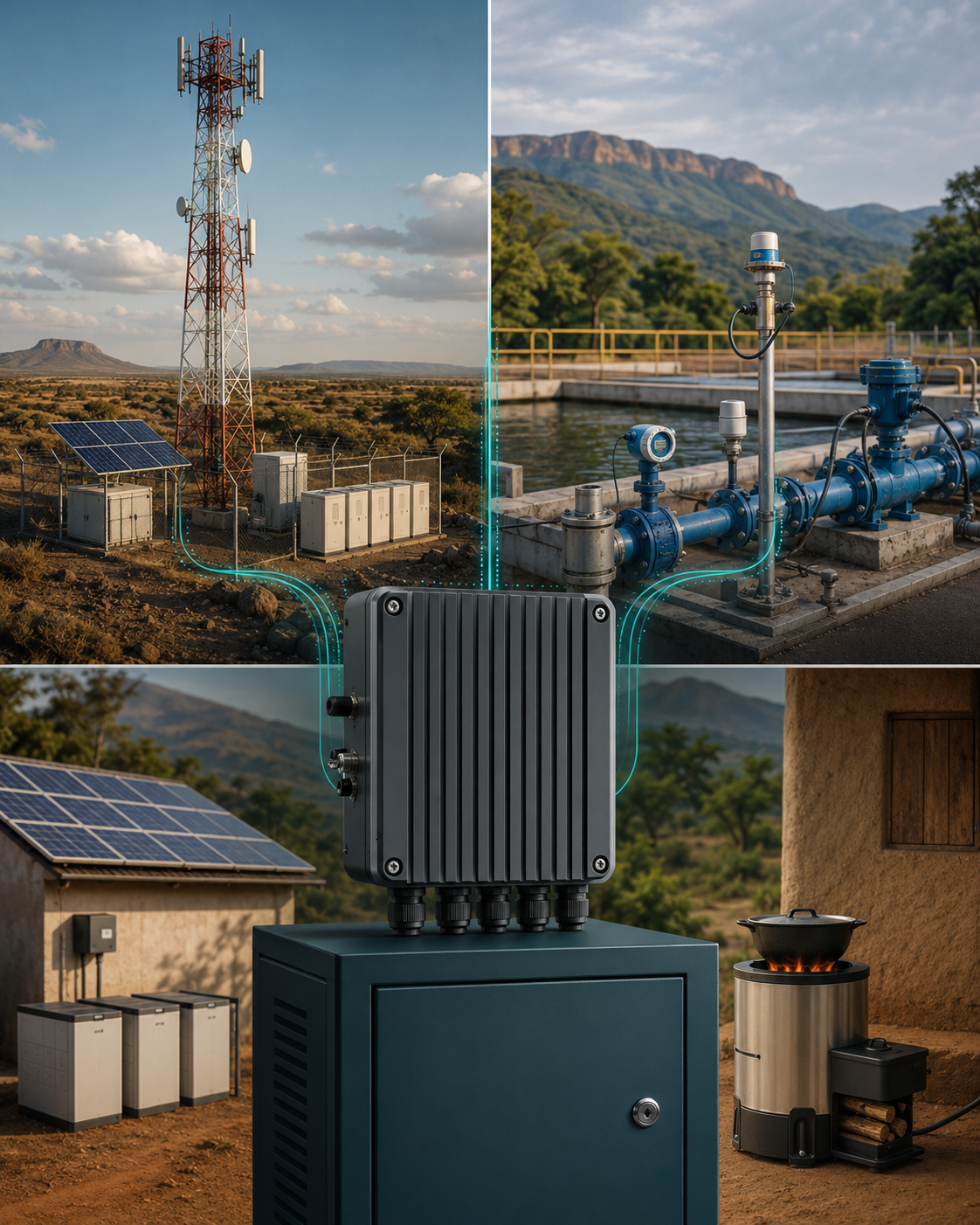
Energy systems, telecom sites, water networks and connected products can produce valuable operational data, but that data may remain separated across different devices, vendors and central platforms.
Sensors, controllers and equipment may use different systems and interfaces.
Remote operations should not depend on every decision travelling continuously to the cloud.
Sending everything upstream can increase data costs without helping teams respond faster.
ARED provides the managed edge layer between supported field equipment and central operations.
Connect approved sensors, controllers, equipment and operational data through defined integrations.
Run supported rules, applications, storage and selected intelligence at the deployment site.
Send the required information to customer dashboards, operational platforms or cloud systems.
ARED is hybrid by design. Local-first does not mean cloud-free.
Approved sensors, meters, controllers and equipment produce operational information.
Provides supported integration, local processing, applications, storage and remote platform management.
Selected data, alerts and events can synchronize with existing customer or partner platforms.
Exact capabilities depend on equipment compatibility, deployment design and the required customer outcome.
Connect supported equipment and data sources through validated interfaces.
Process selected operational information close to where it is created.
Support approved local rules, events and alerts for defined operational conditions.
Run approved monitoring, control or analytics applications on the managed edge environment.
Monitor and maintain the ARED edge platform across distributed deployment locations.
Send required data, events and reports to central systems when connectivity is available.
These are deployment areas, not separate ARED products. Every project begins with equipment and integration review.
Support approved solar, battery, generator, power and distributed-energy monitoring workflows.
Connect supported tower-site power, environmental, security and equipment information.
Support approved pump, tank, flow, pressure, quality and remote-station monitoring.
Add local data and intelligence to approved products, machines and field equipment.
ARED is working on an IoT project involving connected cookstoves. The cookstove is one example of how the ARED edge layer can support distributed energy equipment — collecting approved operational information locally and synchronizing the required data with central systems.
Connected equipment may operate in locations with limited or unstable connectivity. Local processing and temporary data retention can reduce dependence on continuous cloud access while preserving the information the project needs.
Every project must be assessed using the actual equipment, interfaces, required data, local rules, connectivity conditions, security requirements and central-system integration.
Bring one real asset, its technical documentation and one clear operational outcome. ARED can then define a controlled validation before scale.
Pricing depends on gateway profile, equipment integration, applications, storage, support requirements and deployment scale.
Bring the equipment, operational challenge and integration requirements. We will assess whether ARED can provide the managed local intelligence layer.